The Sacred Stone Spirit Camp, which formed months ago on the Missouri River near Cannon Ball, North Dakota, to resist construction of the Dakota Access Pipeline (DAPL), has grown in size to include thousands of people (see this article in the Huffington Post for a quick recap). Indigenous people from across the country and around the world who have fought similar battles have travelled to the camp to show their support. And the movement is spreading! A similar camp, although much smaller, has been set up where the DAPL is supposed to pass under the Mississippi in southern Iowa (see their website or Facebook page).
The federal government may have temporarily halted pipeline construction in the area around the Missouri River, but the water protectors in North Dakota and their allies recognize that the resistance must continue, and many plan to stay at the camp throughout the winter. If you're wondering what you can do to show your support, there are many options. Donations can be made online through the camp's official go fund me page. The camp has an Amazon.com "wish list" too, where you can purchase requested items and they'll be sent directly to the camp. Also, there is a local group, "La Crosse Stands with Standing Rock", collecting supplies that they will take to the camp themselves in mid-October and mid-November. Needed supplies include winter clothes (jackets, gloves, hats, sweaters, socks, boots), blankets and winter sleeping bags, camping gear, and canned goods or dried food. Drop-off sites include English Lutheran Church, UW-L's Cartwright Center, and Three Rivers House (on Main St. across from the library). You can also contribute to the Mississippi camp in Iowa, or buy a t-shirt to support their cause.
Another way to help is to ask your friends, family, neighbors, and acquaintances if they know about the camp and the resistance. Many people who get their news solely from mainstream media don't know what's going on! Here's a 9-minute video from PBS New Hour (a fairly neutral source) that covers many aspects of the story and could be shared with a wide audience. If you've heard of other ways to support the cause, please share them below in the comments!
Sunday, October 2, 2016

October 29 Frac Activist Meeting
From Save the Hills Alliance, Inc.
YOU ARE WELCOME TO ATTEND THE ANNUAL MEETING OF SAVE THE HILLS ALLIANCE, INC.
The Social Impacts of Frac Sand Mining
Saturday, October 29, 2016 – 1:00 p.m. to 3:30 p.m.
Veteran’s Center of Menomonie
E4710 Co. Rd. BB, Menomonie, WI
(1 mile North of I-94 on State Hwy. 25)
Speaker, Thomas W. Pearson, is an associate professor of anthropology in the Social Science Department at the University of Wisconsin-Stout. He received his PhD from the State University of New York at Binghamton and has conducted extensive research in Central America on environmental activism. For the past four years, he has been researching the social dimensions of frac sand mining, particularly grassroots activism and community-level conflicts. He is currently completing a book, tentatively titled, When the Hills Are Gone: Frac Sand Mining and the Struggle for Place, Community, and Democracy, which will be published in 2017 by the University of Minnesota Press. He lives in Menomonie with his partner Tiffani, their two young children, Aidric and Michaela, and an annoying dog named Poochacho!
Presentation - Frac Sand Mining and Quality of Life: Understanding Potential Social Impacts.
When evaluating the impacts of frac sand mining, policymakers, government officials, and concerned citizens often focus on economic and environmental questions. Social dynamics are commonly ignored, even though proposed mining operations typically generate community-level conflicts and introduce changes that alter people’s quality of life. This presentation brings a social science perspective to understanding the impacts of mining and other extraction-based industries such as hydraulic fracturing. Drawing on first-hand research in Wisconsin, it also examines people’s experiences living near frac sand operations. Residents grappling with a sudden influx of unwanted mining activity often describe increased suspicion among neighbors, loss of trust in local government, strain on community ties and social networks, increased stress and anxiety, confusion about potential hazards, uncertainty about the future, and a diminished sense of place and belonging. A better understanding of these sorts of impacts will help concerned citizens and local officials deal with controversial industries such as frac sand mining.
Speaker, Kimberlee Wright, was born and raised in central Illinois. She received a law degree and a BS in rural sociology from the University of Wisconsin-Madison. Since graduating from law school she has worked statewide in the public interest on issues ranging from elder law, environmental protection, conservation, and support for people affected by family violence. Her professional experience includes serving as the director of conservation programs for The Nature Conservancy and as the executive director for Domestic Abuse Intervention Services. Prior to joining Midwest Environmental Advocates as executive director, Wright managed a statewide grant program for land trusts working in partnership with the Wisconsin Department of Natural Resources to protect critical habitat and natural areas. Wright’s community service has benefitted children and adults with disabilities, access to affordable housing, environmental protection, and the preservation of pristine natural areas.
Presentation - The Role of Citizens in Public Policy.
The rapid expansion of the frac sand industry in western Wisconsin outpaced the establishment of standards to protect public health, the environment, and community assets. Oversight at the local level has been critical to filling the void of state failure to develop the regulatory framework needed for a landscape-scale extractive industry. In spite of powerful special interests with undue influence over decision-makers, citizens have moved steadily forward while working together to protect their communities. Elected officials at all levels of government must be held accountable for shifting risks to citizens while industry profits from externalizing their costs to communities.
Our speakers will be introduced by Dave Carlson, an award-winning outdoors journalist. Dave is well known from his long-running TV series, “Northland Adventures” and “Northland Outdoors.” Dave will also moderate a period of questions and answers.
We will also present a short preview of Jim Tittle’snew and upcoming documentary, “Promise in the Sand.”
Presented by: Save The Hills Alliance, Inc. STHA, Inc. is a registered 501(c)(3) charitable tax-exempt non-profit organization. Our mission is to protect the natural environment and promote the ecologically sound use of land through public awareness, education, and advocacy. Email:AllianceSaveTheHills.register@
Presented by: Save The Hills Alliance, Inc. STHA, Inc. is a registered 501(c)(3) charitable tax-exempt non-profit organization. Our mission is to protect the natural environment and promote the ecologically sound use of land through public awareness, education, and advocacy. Email:AllianceSaveTheHills.register@
Wednesday, September 28, 2016
October 1 Wisconsin Solar Tour
Saturday - all over Wisconsin, tours of solar installations will be highlighted by Midwest Renewable Energy Association. More info/sign up here: https://www.midwestsolartraining.org/wisconsin-solar-tour
Closest to La Crosse: Pheasant Walk Permaculture, "A 13.5-acre site. Earth-bermed, single story "geriatric-anticipatory" house; passive solar plus combined solar sub-floor and water heating. Roof rainwater supplies a 700 square-foot pond and chicken coop. Net-metered and fully powered by grid-tied 2.5 Kw wind generator and 5 Kw photovoltaic. Permaculture fruit trees and nuts planted along swales; perennial berries, herbs and vegetables planted on terraces. All-season earth-bermed greenhouse/chicken housing." Contact Kelvin Rodolfo, 608 637-6159.

Closest to La Crosse: Pheasant Walk Permaculture, "A 13.5-acre site. Earth-bermed, single story "geriatric-anticipatory" house; passive solar plus combined solar sub-floor and water heating. Roof rainwater supplies a 700 square-foot pond and chicken coop. Net-metered and fully powered by grid-tied 2.5 Kw wind generator and 5 Kw photovoltaic. Permaculture fruit trees and nuts planted along swales; perennial berries, herbs and vegetables planted on terraces. All-season earth-bermed greenhouse/chicken housing." Contact Kelvin Rodolfo, 608 637-6159.
Transportation events in the news
The Coulee Region Sierra Club has a post up about some important transportation events coming up.
On THURSDAY, SEPTEMBER 29, the Wisconsin Counties Association is hosting Transportation Town Halls in each Wisconsin County at 7 p.m. Lack of publicity about these events and, in our case, transit inaccessible venue might give you the idea that no one is supposed to attend. But it's a great opportunity to advocate for NON PRIVATE VEHICLE (greenhouse gas emitting) transportation options not just in cities but in rural areas - regional transit. So, please attend! Find your county's location t the link. The La Crosse forum will be at 7 p.m. at the County Highway Garage, 301 Carlson Road, West Salem.
On WEDNESDAY, OCTOBER 5, the Sierra Club will host a La Crosse Area Transportation Forum which will include information about current transportation options, information about local and state budget issues, and suggestions for getting more involved in advocating for equitable and sustainable transportation options in the future. The info fair starts at 6 p.m. and the program begins at 6:30 p.m. at the Southside Neighborhood Center, 1300 S. 6th Street. You can get there on the #1 MTU.
Unfortunately, you can NOT get to the September 29 event from La Crosse by public transportation, according to the Trip Planner at the MTU site. However, I believe that you CAN get there by public transportation (though returning will definitely be a problem). Here's how:
1. Some time before 6 pm, contact the Onalaska/Holmen/West Salem shared ride service at (608) 784-0000 and tell them you will need to go to the event address from the Valley View Mall MTU stop at 6:33 pm.
2. Take the #5 bus that leaves at 6:12 p.m. from the La Crosse Transit Center to Valley View Mall. The fare will be $1.50 for an adult < age 65 and $0.75 for elders (65+) and those with disabilities. College students with IDs and those who have passes = no fare required. GET A TRANSFER which you can use for your OHWS fare.
Thankfully, college is in session so the Valley View Mall bus goes every 1/2 hour in the evenings. If there were no college classes in session, you would need to leave 1/2 hour earlier.
The real problem comes in the return trip because the OHWS Shared Ride Service ends at 7 p.m. So, you will need to find some way to get from the county garage to Valley View Mall.
If you are a bicyclist, you could take your bike on the bus to Valley View and hope that there's space to throw it in the back of the OHWS Shared Ride van (there are no bike racks on those vehicles), then ride your bike back to Valley View either taking your life into your own hands along Highway 16 (5.3 miles according to Google Maps) OR using the La Crosse River State Trail (about 8 miles) which might be a nice jaunt for a sunny afternoon, but maybe not so feasible for a night time ride in possible rainy weather on a trail that has been known to have some washouts from heavy rains.
Here is why we need to make sure that transportation planners get the message that NOT EVERYONE HAS OR CAN OR WANTS TO DRIVE A CAR. Then what? You must either pay a high cost in time, often, taking public transportation, or in money if you can find a cab in a rural community at night. Or, probably, you will just not attend, shop, visit, or otherwise engage in the world.
This doesn't even touch on the environmental problems caused by relying on private vehicles for transportation or on the costs to communities, especially hub communities like La Crosse, to pay for infrastructure needed to service all these private vehicles.
So, please attend if you can the September 29 meeting AND the Wednesday, October 5 Transportation Forum sponsored by the Sierra Club, 10,000 Friends of Wisconsin, WISPRG, and other environmental groups. And please contact your local and state legislators and urge them to start considering other methods of local and regional transportation besides private vehicles.

On THURSDAY, SEPTEMBER 29, the Wisconsin Counties Association is hosting Transportation Town Halls in each Wisconsin County at 7 p.m. Lack of publicity about these events and, in our case, transit inaccessible venue might give you the idea that no one is supposed to attend. But it's a great opportunity to advocate for NON PRIVATE VEHICLE (greenhouse gas emitting) transportation options not just in cities but in rural areas - regional transit. So, please attend! Find your county's location t the link. The La Crosse forum will be at 7 p.m. at the County Highway Garage, 301 Carlson Road, West Salem.
On WEDNESDAY, OCTOBER 5, the Sierra Club will host a La Crosse Area Transportation Forum which will include information about current transportation options, information about local and state budget issues, and suggestions for getting more involved in advocating for equitable and sustainable transportation options in the future. The info fair starts at 6 p.m. and the program begins at 6:30 p.m. at the Southside Neighborhood Center, 1300 S. 6th Street. You can get there on the #1 MTU.
Unfortunately, you can NOT get to the September 29 event from La Crosse by public transportation, according to the Trip Planner at the MTU site. However, I believe that you CAN get there by public transportation (though returning will definitely be a problem). Here's how:
1. Some time before 6 pm, contact the Onalaska/Holmen/West Salem shared ride service at (608) 784-0000 and tell them you will need to go to the event address from the Valley View Mall MTU stop at 6:33 pm.
2. Take the #5 bus that leaves at 6:12 p.m. from the La Crosse Transit Center to Valley View Mall. The fare will be $1.50 for an adult < age 65 and $0.75 for elders (65+) and those with disabilities. College students with IDs and those who have passes = no fare required. GET A TRANSFER which you can use for your OHWS fare.
Thankfully, college is in session so the Valley View Mall bus goes every 1/2 hour in the evenings. If there were no college classes in session, you would need to leave 1/2 hour earlier.
The real problem comes in the return trip because the OHWS Shared Ride Service ends at 7 p.m. So, you will need to find some way to get from the county garage to Valley View Mall.
If you are a bicyclist, you could take your bike on the bus to Valley View and hope that there's space to throw it in the back of the OHWS Shared Ride van (there are no bike racks on those vehicles), then ride your bike back to Valley View either taking your life into your own hands along Highway 16 (5.3 miles according to Google Maps) OR using the La Crosse River State Trail (about 8 miles) which might be a nice jaunt for a sunny afternoon, but maybe not so feasible for a night time ride in possible rainy weather on a trail that has been known to have some washouts from heavy rains.
Here is why we need to make sure that transportation planners get the message that NOT EVERYONE HAS OR CAN OR WANTS TO DRIVE A CAR. Then what? You must either pay a high cost in time, often, taking public transportation, or in money if you can find a cab in a rural community at night. Or, probably, you will just not attend, shop, visit, or otherwise engage in the world.
This doesn't even touch on the environmental problems caused by relying on private vehicles for transportation or on the costs to communities, especially hub communities like La Crosse, to pay for infrastructure needed to service all these private vehicles.
So, please attend if you can the September 29 meeting AND the Wednesday, October 5 Transportation Forum sponsored by the Sierra Club, 10,000 Friends of Wisconsin, WISPRG, and other environmental groups. And please contact your local and state legislators and urge them to start considering other methods of local and regional transportation besides private vehicles.
Thursday, September 22, 2016
Who will heed these warnings?
Years of citizen action, testimony, scientists' warnings, facts, studies, papers and other blatant warnings have not been enough to stop the transportation of hazardous substances, especially dangerous Bakken crude oil, by rail along our sensitive environmental centers, through our cities, and next to our precious clean water resources. Our so-called liberal president does nothing to stop it and the railroads' robotic response whenever a disaster occurs, "Safety is our highest priority."
Yet another warning has come in the form of a BNSF derailment near Ferryville. Tell me if any of the highlighted phrases below sound familiar, like you've heard them before from citizens telling governments and railroads that we need to stop these dangerous shipments.
"A BNSF freight train derailed Thursday morning on a washed-out bridge ...}
"One of the locomotives spilled about 2,500 gallons of fuel, with some making its way into the Mississippi River ..."
" ... access to the site is difficult because of damage from two days of heavy rains."
"... high water levels in the Mississippi are preventing crews from deploying booms ..."
What if these trains had been loaded with millions of gallons of even more toxic Bakken crude oil? What if those trains had leaked into the river with access blocked by flood waters?
This may not be our final warning, but it's surely one we must heed.
Yet another warning has come in the form of a BNSF derailment near Ferryville. Tell me if any of the highlighted phrases below sound familiar, like you've heard them before from citizens telling governments and railroads that we need to stop these dangerous shipments.
"A BNSF freight train derailed Thursday morning on a washed-out bridge ...}
"One of the locomotives spilled about 2,500 gallons of fuel, with some making its way into the Mississippi River ..."
" ... access to the site is difficult because of damage from two days of heavy rains."
"... high water levels in the Mississippi are preventing crews from deploying booms ..."
What if these trains had been loaded with millions of gallons of even more toxic Bakken crude oil? What if those trains had leaked into the river with access blocked by flood waters?
This may not be our final warning, but it's surely one we must heed.
Thursday, September 15, 2016
From La Crosse Citizens' Climate Lobby


The Pentagon ordered its officials in January to start incorporating
climate change into every major
consideration, from weapons testing to
preparing troops for war. Photograph: Charles Dharapak/AP
September La Crosse CCL Meeting
Tuesday, September 20th, 6:30 p.m.
Basement Meeting Room
UU Fellowship of La Crosse
401 West Ave S, La Crosse, WI
Parking behind the UU Fellowship building
Basement Meeting Room
UU Fellowship of La Crosse
401 West Ave S, La Crosse, WI
Parking behind the UU Fellowship building
Listen to the September International CCL Call:
- Playback options for the September call: Listen to or download the call from CCL's podcasting channel or iTunes.
In the News
Military experts say climate change poses 'significant risk' to security
The Guardian
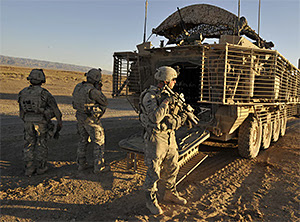 "A
coalition of 25 military and national security experts, including
former advisers to Ronald Reagan and George W Bush, has warned that
climate change poses a “significant risk to US national security and
international security” that requires more attention from the US federal
government.
"A
coalition of 25 military and national security experts, including
former advisers to Ronald Reagan and George W Bush, has warned that
climate change poses a “significant risk to US national security and
international security” that requires more attention from the US federal
government.The prominent members of the US national security community warned that warming temperatures and rising seas will increasingly inundate military bases and fuel international conflict and mass migration, leading to “significant and direct risks to US military readiness, operations and strategy". READ MORE
IF THIS TIMELINE DOESN'T CONVINCE YOU CLIMATE CHANGE IS REAL, NOTHING WILL
Popular Science
 "In this xkcd comic,
Randall Munroe tackled human-caused climate change, illustrating how
Earth's average temperature has changed in the last 22,000 years, since
the last glaciation — when glaciers were as far south as New York.
"In this xkcd comic,
Randall Munroe tackled human-caused climate change, illustrating how
Earth's average temperature has changed in the last 22,000 years, since
the last glaciation — when glaciers were as far south as New York.Munroe's comic beautifully illustrates the idea that while climate has changed before, it hasn't changed so suddenly. Four degrees Celsius warming over 22,000 years due to natural variations like changes in the Earth's orbit, or changes in the circulation of the oceans is one thing. Warming by two degrees Celsius over 100 years because of excessive greenhouse gas emissions is quite another."... READ MORE

CCL'S CLIMATE GUEST FOR SEPTEMBER
Former Congressman Bob Inglis
As
we gear up to introduce and pass legislation, this is good time to look
at the nuts and bolts of the legislative process, and who better to
guide us than former Republican Congressman Bob Inglis. Inglis, who
introduced his own carbon tax bill in 2009, left Congress in 2011 and
founded RepublicEn, which is working to build support among conservatives for a market-based solution to climate change.
We look forward to seeing you at the September 20th meeting. Email lacrosseccl@gmail.com with any questions.
All the best,
Larry Sleznikow
La Crosse CCL Co-leader
lacrosseccl@gmail.com
All the best,
Larry Sleznikow
La Crosse CCL Co-leader
lacrosseccl@gmail.com
Sunday, September 4, 2016
The Neverending Story
Good news. Bad news.
This is good news: http://www.wpr.org/enbridge-drops-sandpiper-pipeline-project
This is the bad news:
You may have seen the story that leading insurance companies are demanding of the G20 nations that they stop funding fossil fuel development. We need to make this a US policy as well - no offshore fracking, no oiling in the Arctic, no oil/gas exports. None. Period.
This is good news: http://www.wpr.org/enbridge-drops-sandpiper-pipeline-project
This is the bad news:
You may have seen the story that leading insurance companies are demanding of the G20 nations that they stop funding fossil fuel development. We need to make this a US policy as well - no offshore fracking, no oiling in the Arctic, no oil/gas exports. None. Period.
Subscribe to:
Posts (Atom)